
- Home
- Tile Adhesive
- Matrix Tile Adhesive
Matrix Tile Adhesive
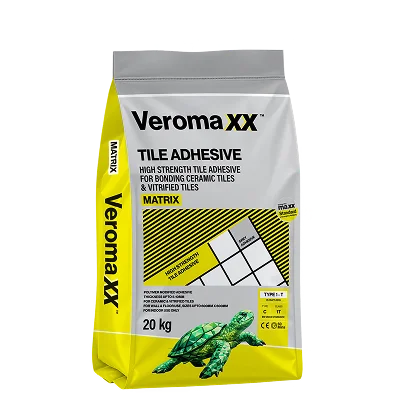
Veromaxx Matrix is the workhorse of the Veromaxx tile adhesive range — a polymer-modified cement-based adhesive engineered to fix both ceramic and vitrified tiles on indoor walls and floors, up to 600×600mm tile size. Classified as Type 1 T (C1 T) under IS 15477 and EN 12004, Matrix combines the reliable bond performance needed for vitrified tile installation with the added slip resistance rating (the “T” designation) that keeps tiles in position during vertical wall application. When your indoor project mixes ceramic and vitrified tiles across walls and floors, Matrix is the single-product solution.
What is Veromaxx Matrix Tile Adhesive?
Veromaxx Matrix is a Type 1 T (Class C1 T) polymer-modified cementitious tile adhesive. The Type 1 rating confirms reliable bond strength suitable for both absorbent ceramic tiles and non-porous vitrified tiles up to 600×600mm size. The additional “T” designation means the adhesive is formulated for reduced tile slip on vertical wall applications — critical for wall tile fixing where gravity would otherwise cause tile drift before the adhesive sets.
Matrix is the correct specification for the most common indoor Indian residential and light-commercial tile project: mixed ceramic and vitrified tiles on walls and floors, sized up to 600×600mm, in areas that stay indoors.
Stronger Than Traditional Cement Mortar
For larger tiles, exterior use, or wet areas requiring higher performance, step up to Veromaxx Alpha (Type 2 T) or higher.

Key Features of Veromaxx Matrix
Polymer-modified cement-based formulation — Type 1 T (C1 T) classification per IS 15477 / EN 12004
Works with both ceramic and vitrified tile materials up to 600×600mm
Wall-and-floor rated for indoor use
Slip-resistance rating (T designation) for reliable vertical wall application
Thin-bed application from 5mm to 10mm
Consistent workability and pot life for full working day performance
20kg moisture-resistant HDPE-lined bag
ISO-certified manufacturing quality control
Benefits of Using Veromaxx Matrix Tile Adhesive
- Single product handles both ceramic and vitrified tile installation across the whole indoor project — simplifies procurement
- Slip-resistance rating means tiles stay in position on walls without sliding down during set
- Type 1 T pricing keeps the specification economical for the most common project scale
- Higher bond strength than sand-cement mortar — no hollow tiles, no debonding
- Thin-bed application saves floor build-up and material cost versus mortar
- Extended open time in North Indian summer heat conditions
Where to Use
Veromaxx Matrix is specified for
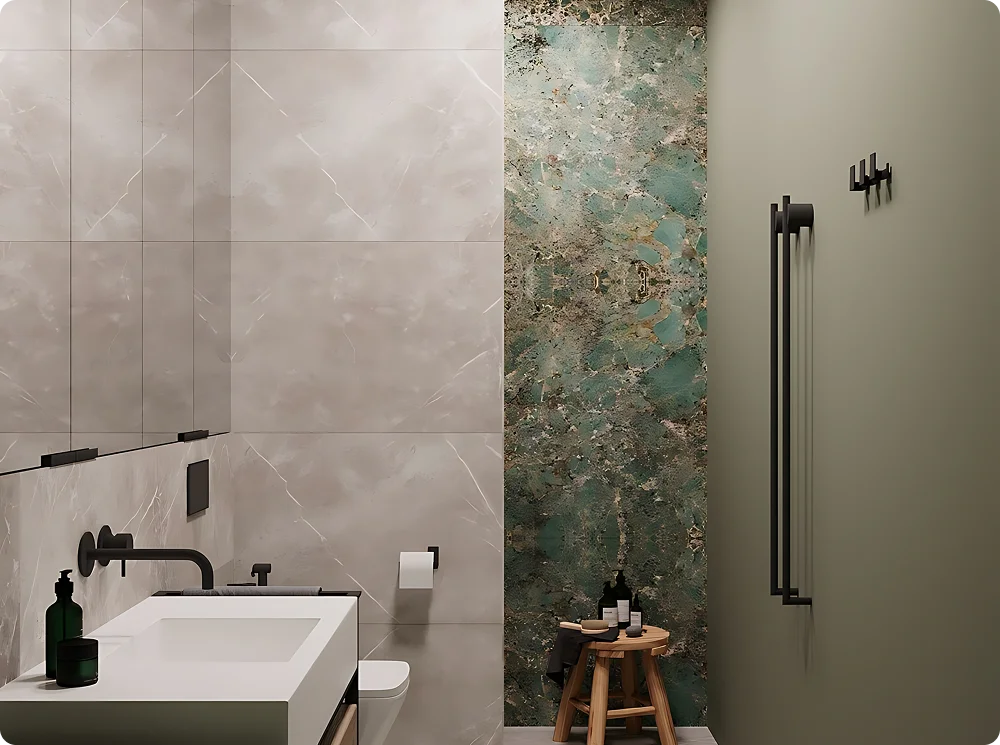
Residential Bathroom
Residential bathroom wall and floor tiling with ceramic or vitrified tiles up to 600×600mm
Best For tags
- Vitrified & Porcelain Tiles
- Kitchens & Bathrooms
- Residential & Builder Floors
- Showrooms & Commercial
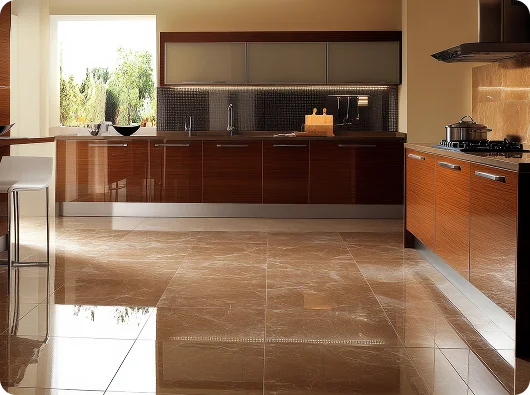
Kitchen Wall
Kitchen wall backsplash and floor tile installation
BEST FOR
- Standard Ceramic
- Indoor Floors
- Residentials projects
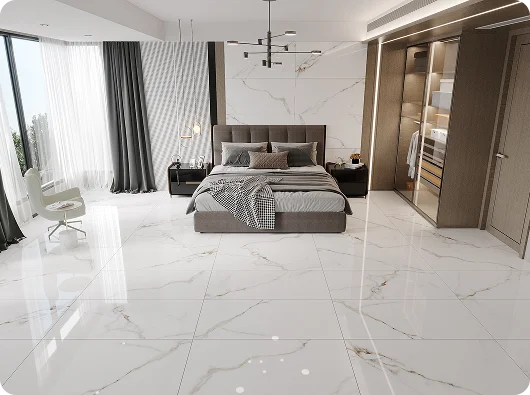
Bedroom
Bedroom, living room, hallway floor tiling with vitrified tiles
BEST FOR
- Standard Ceramic
- Indoor Floors
- Residentials projects
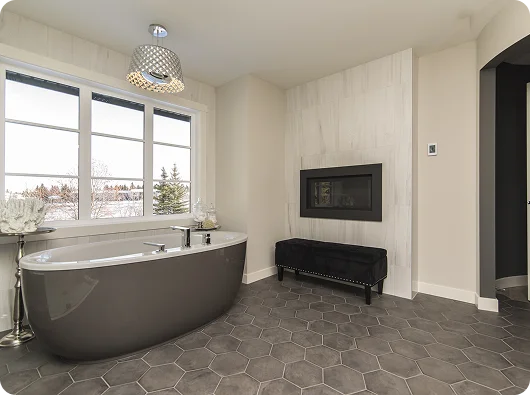
Utility Area
Utility area and store room walls and floors
BEST FOR
- Standard Ceramic
- Indoor Floors
- Residentials projects

Light-commercial indoor installations
Light-commercial indoor installations — offices, retail, showrooms
BEST FOR
- Standard Ceramic
- Indoor Floors
- Residentials projects
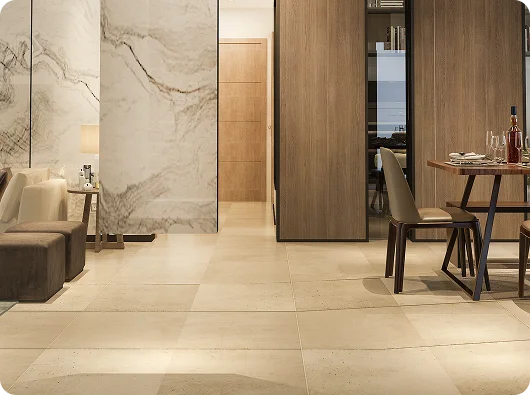
Indoor Tile
Interior tile renovation projects covering both walls and floors in one specification
BEST FOR
- Standard Ceramic
- Indoor Floors
- Residentials projects
Suitable Substrates & Tile Materials for Matrix
Suitable substrates: cured cement plaster on walls (minimum 28 days), gypsum plaster (with appropriate primer), concrete slab floors, cement screed floors, existing sound tiles (with appropriate surface preparation), brick and block masonry. All substrates must be clean, sound, plumb (walls) or level (floors) and free of dust, oil, curing compounds and loose material.
Suitable tile materials: glazed and unglazed ceramic tiles, vitrified tiles, porcelain tiles up to 600×600mm size. Not recommended for tiles larger than 600×600mm, natural marble or granite (use Omega or Quantum), swimming pool tile installations, or exterior tiles.
Matrix Tile Adhesive Technical Specifications
From interior residential luxury to demanding industrial facades, Veromaxx adhesives bond securely in every environment.
Product Code
Veromaxx Matrix
Base
Polymer-modified cementitious powder
Classification
IS 15477 Type 1 T / EN 12004 Class C1 T
Colour
Grey
Mixing ratio
Approximately 25-28% water by weight of powder
Pot life
3-4 hours at 27°C
Open time
20 minutes minimum
Adjustment time
15-20 minutes
Tensile bond strength (initial)
≥ 0.5 N/mm² (as per IS 15477 Type 1)
Coverage
4-5 kg per m² at 5mm bed thickness
Setting time (initial)
6-8 hours
Full cure
24 hours (light traffic), 72 hours (heavy load)
Application temperature
5°C to 40°C substrate temperature
Pack size
20 kg
Shelf life
6 months from manufacture in sealed original packaging
Standard compliance
IS 15477 Type 1 T, EN 12004 Class C1 T
How to Mix & Apply Veromaxx Matrix
Follow this verified 4-step execution protocol to ensure a 100% void-free ceramic floor installation.
Walls or floors must be clean, sound, plumb or level, and free of dust, oil, curing compounds and loose material. Dampen highly absorbent substrates in hot weather.
Measure clean water into a clean bucket at 25-28% by weight of powder (approximately 5-5.5 litres per 20kg bag). Add Veromaxx Matrix powder gradually while mixing with a low-speed drill and paddle.
Mix for 3-5 minutes until a smooth, lump-free, workable paste is achieved. Let the mix stand for 5 minutes to allow polymer activation, then re-mix briefly before use.
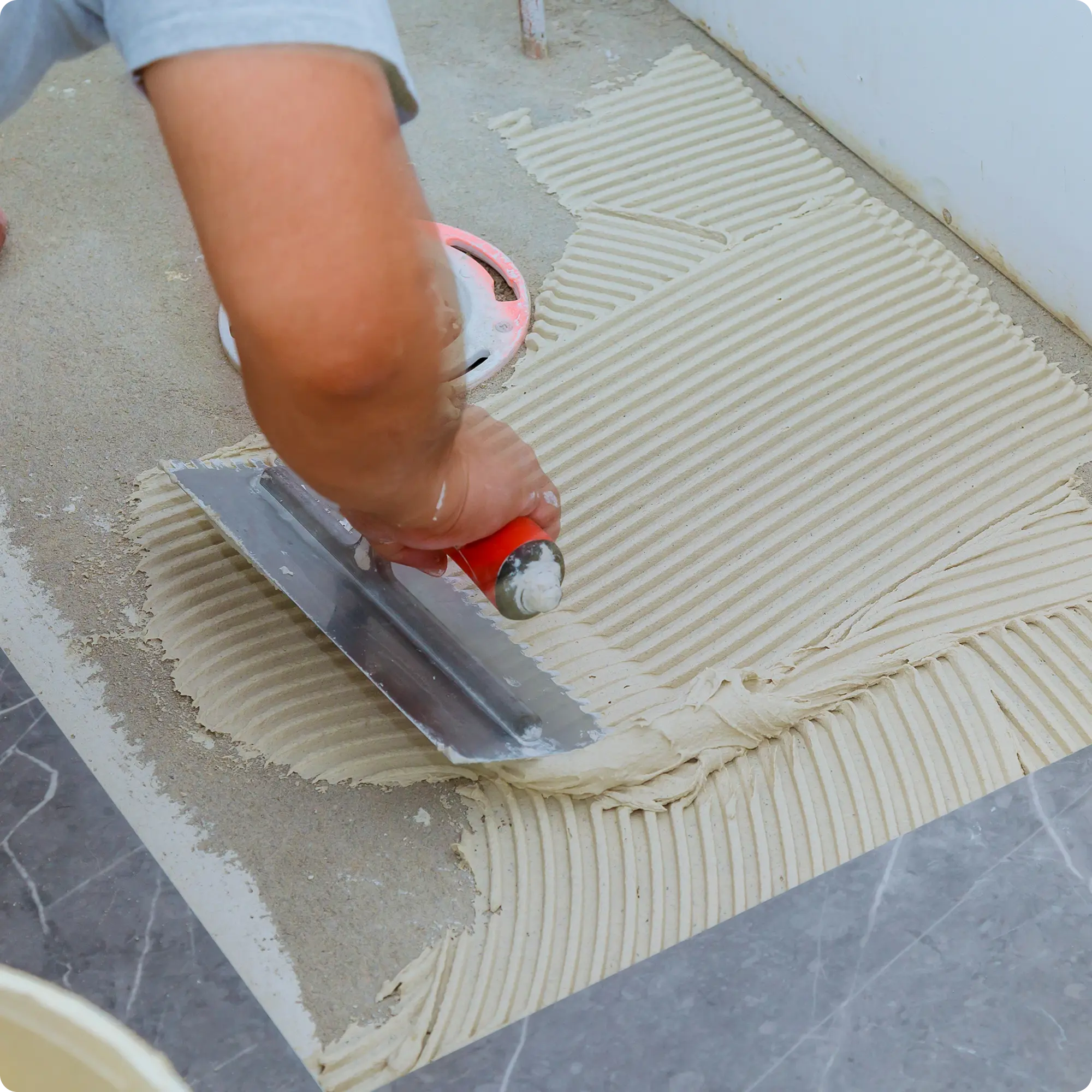
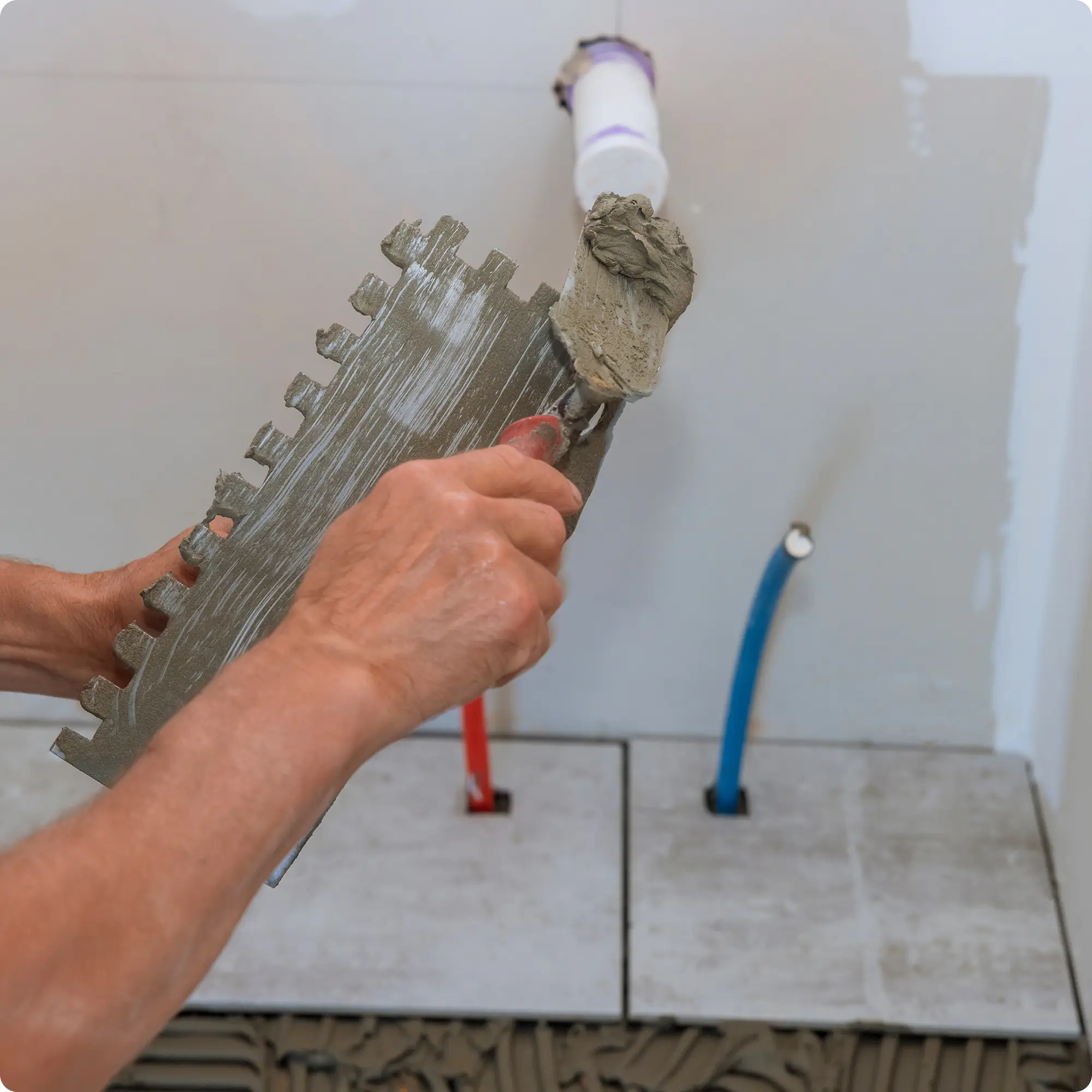
Apply the adhesive to the substrate using a notched trowel held at 60° — use a 6mm notch for standard ceramic tiles, 10mm notch for vitrified tiles or tiles above 300×300mm. Work in small areas within the 20-minute open time.
Press each tile firmly into the adhesive bed with a slight twisting motion to collapse the ribs. For vitrified tiles and tiles above 300×300mm, back-butter the tile as well to ensure full coverage. Check back coverage on the first few tiles.
Adjust tile position within the 15-20 minute adjustment time. On walls, use tile spacers and check plumb regularly — the T-rated slip resistance prevents tile drift but does not eliminate the need for spacers. Remove excess adhesive from faces and joints before it sets. Do not grout for at least 24 hours.
Walls or floors must be clean, sound, plumb or level, and free of dust, oil, curing compounds and loose material. Dampen highly absorbent substrates in hot weather.
Measure clean water into a clean bucket at 25-28% by weight of powder (approximately 5-5.5 litres per 20kg bag). Add Veromaxx Matrix powder gradually while mixing with a low-speed drill and paddle.
Mix for 3-5 minutes until a smooth, lump-free, workable paste is achieved. Let the mix stand for 5 minutes to allow polymer activation, then re-mix briefly before use.
Apply the adhesive to the substrate using a notched trowel held at 60° — use a 6mm notch for standard ceramic tiles, 10mm notch for vitrified tiles or tiles above 300×300mm. Work in small areas within the 20-minute open time.
Press each tile firmly into the adhesive bed with a slight twisting motion to collapse the ribs. For vitrified tiles and tiles above 300×300mm, back-butter the tile as well to ensure full coverage. Check back coverage on the first few tiles.
Adjust tile position within the 15-20 minute adjustment time. On walls, use tile spacers and check plumb regularly — the T-rated slip resistance prevents tile drift but does not eliminate the need for spacers. Remove excess adhesive from faces and joints before it sets. Do not grout for at least 24 hours.
Matrix Tile Adhesive Drying & Curing Time
Why Choose Veromaxx Matrix Tile Adhesive
Matrix is the specification that covers the most common Indian residential and light-commercial indoor tile project: mixed ceramic and vitrified tiles, walls and floors, up to 600×600mm size, indoor exposure only. One product for the entire project simplifies procurement, reduces on-site stock complexity, and ensures consistent performance across all tiled surfaces. The Type 1 T classification hits the right specification without over-engineering — economical for high-volume work while delivering reliable bond strength and vertical slip resistance.
Complete Solutions for Every Stage of Tiling
From fixing and jointing to cleaning and finishing, Veromaxx provides a complete range of construction chemical solutions.
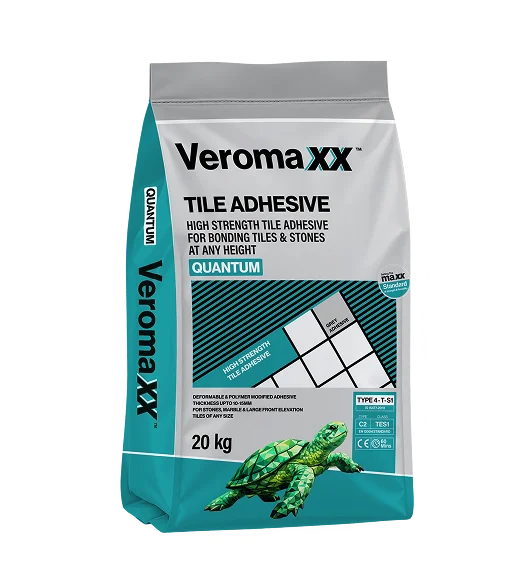
Tile Adhesive
High-bond solutions for ceramic, vitrified, porcelain and large-format tiles.
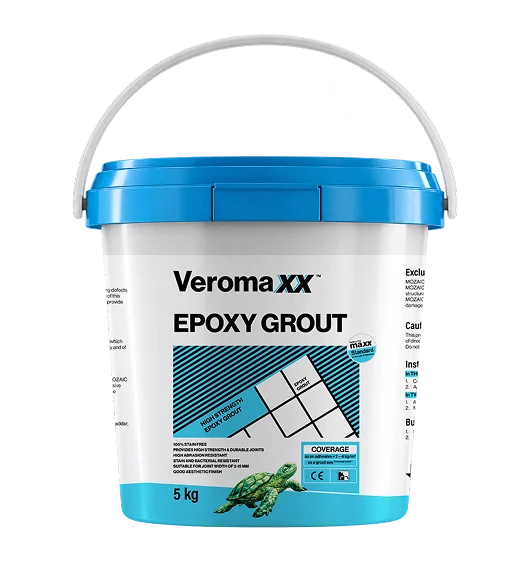
Grout
Reliable, waterproof jointing solutions for residential and commercial applications.
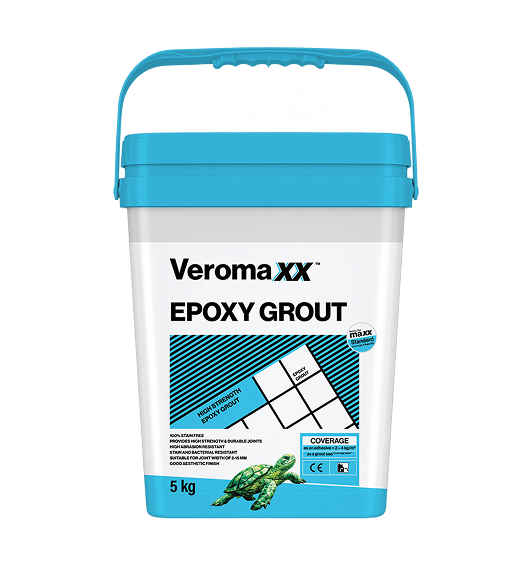
Epoxy Grout
Advanced chemical-resistant and stain-resistant protection for demanding environments.
FAQs About Matrix Tile Adhesive
Find answers to all your questions about our products, and applications.
What is the difference between Bio and Matrix?
Bio is a Type 1 (C1) adhesive for ceramic tiles only on indoor floors. Matrix is Type 1 T (C1 T) – the “T” adds slip resistance for wall application, and Matrix is rated for both ceramic and vitrified tiles up to 600×600mm on walls and floors. Choose Matrix when your project involves any wall tiling, any vitrified tiles, or tiles above the standard ceramic format. Choose Bio only for pure ceramic floor projects.
Can I use Matrix outdoors?
No. Matrix is rated for indoor use only. For outdoor applications – exterior floors, balconies, façade cladding – use Veromaxx Alpha (Type 2 T, indoor and outdoor) or higher grades. Outdoor installations face thermal cycling, UV exposure and moisture ingress that Type 1 adhesive is not formulated to handle.
What tile size range does Matrix support?
Matrix is rated for tiles up to 600×600mm. For tiles up to 600×1200mm, use Veromaxx Alpha (indoor and outdoor) or Omega (for cladding). For tiles larger than 600×1200mm, use Veromaxx Quantum, which handles any tile size.
Can I use Matrix on bathroom walls?
Yes. Matrix is wall-and-floor rated for indoor use, and its slip resistance (T) rating is designed for vertical wall application. Matrix is a strong choice for residential bathroom walls with ceramic or vitrified tiles up to 600×600mm. For premium bathrooms or larger wall tiles, consider stepping up to Alpha.
How much Matrix do I need per square metre?
At 5mm bed thickness (standard ceramic tiles): 4-5 kg per m². At 6mm bed thickness (vitrified tiles or tiles above 300×300mm): 5-6 kg per m². For back-buttering large tiles, add 2-3 kg per m² to allow for adhesive on both surfaces. Add 10-15% waste allowance to bag quantity calculations.
Is Matrix suitable for vitrified tiles?
Yes. Matrix is rated for both ceramic and vitrified tiles up to 600×600mm, in indoor applications. For larger vitrified tiles or for outdoor vitrified installations, use Veromaxx Alpha or higher.
Do I need to back-butter tiles when using Matrix?
For ceramic tiles below 300×300mm, back-buttering is not usually required. For vitrified tiles or any tile above 300×300mm, back-buttering is recommended to ensure at least 80% coverage on the tile back — critical for long-term bond integrity.
What is the pot life of Veromaxx Matrix?
Matrix has a 3-4 hour pot life at 27°C. In North Indian summer conditions (above 35°C), pot life may reduce to 2-2.5 hours – mix smaller batches during peak summer to avoid material waste. In cooler winter conditions, pot life extends to 4-5 hours.