





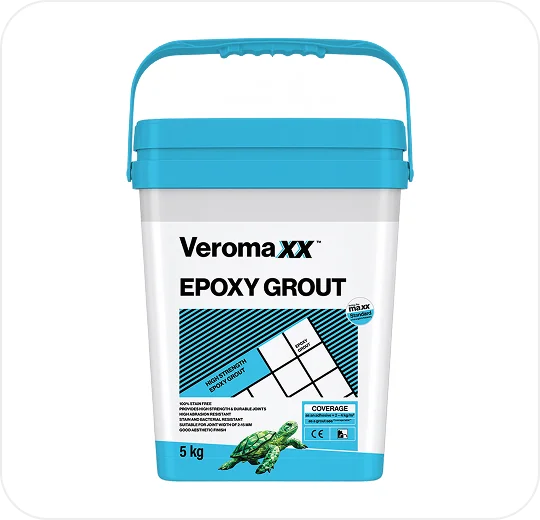
Epoxy Grout for Wall & Floor Tiles
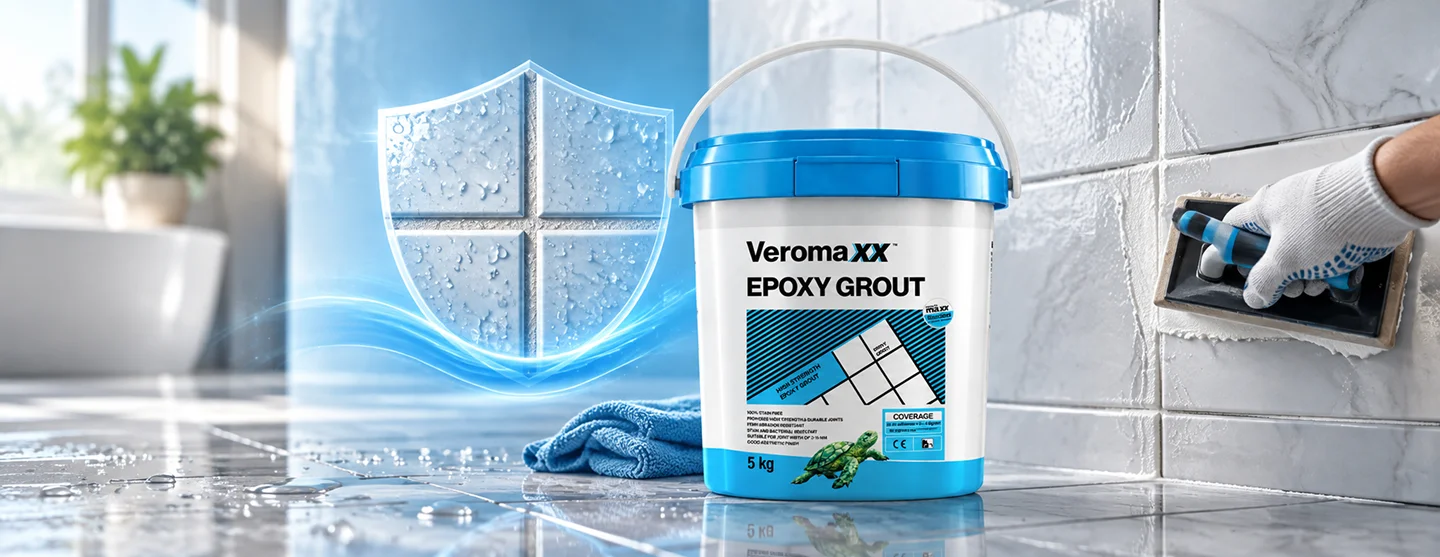
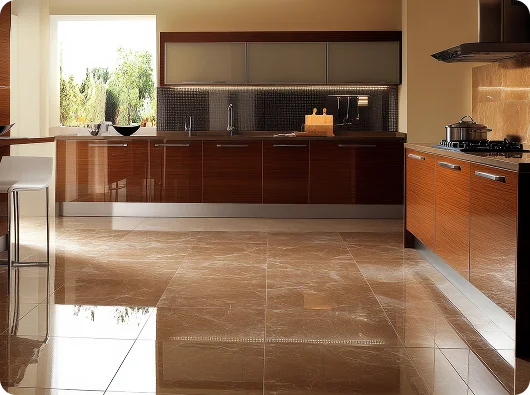
Veromaxx epoxy grout for tiles is a high-performance joint filler engineered for the demanding wet-area and heavy-use installations that define modern Indian construction. Whether you are grouting a residential bathroom floor, a kitchen backsplash, a commercial retail floor or a swimming pool surround, epoxy grout gives a waterproof, stain-resistant, chemical-resistant joint that outperforms conventional cement grout by every measure that matters.
What is Veromaxx Epoxy Grout?
Epoxy grout is a two-part or three-part system that combines an epoxy resin, a hardener and a filler powder into a workable paste. When cured, the epoxy chemistry creates joints that are effectively waterproof, resistant to staining from food, oil and cleaning chemicals, and mechanically stronger than the surrounding tile. Where cement grout absorbs water, discolours, cracks and eventually crumbles, properly-applied epoxy grout lasts the life of the installation.
Veromaxx epoxy grout is formulated for the full range of tile installations - wall tiles, floor tiles, large-format tiles, small mosaics, and every combination in between.
Stronger Than Traditional Cement Mortar
Available in a range of colours to complement any tile choice, and engineered for the extended pot life that lets applicators finish larger areas per batch.
Key Features of Veromaxx Epoxy Grout
- Two-part epoxy resin system with high mechanical strength
- Fully waterproof once cured — no water absorption at the joint
- Stain-resistant against food, oil, coffee, wine and household chemicals
- Chemical-resistant for kitchen, laboratory and industrial floors
- Available in a range of colours including whites, greys and accent tones
- No efflorescence, no colour fading, no crumbling over time
Suitable Substrates & Tile Materials for Epoxy Grout
Veromaxx epoxy grout bonds cleanly to all standard tile edges: ceramic, vitrified, porcelain, glazed and unglazed. Suitable for use with any tile fixing adhesive from the Veromaxx range. Substrate must be a fully cured tile adhesive installation — allow the tile fixing adhesive to cure for at least 24 hours before grouting.
Where to Use Epoxy Grout for Tiles
Epoxy grout is the right choice for any tile installation where cement grout is likely to fail – wet areas, high-traffic zones, food-preparation areas, chemical exposure, and any place where long-term appearance matters.
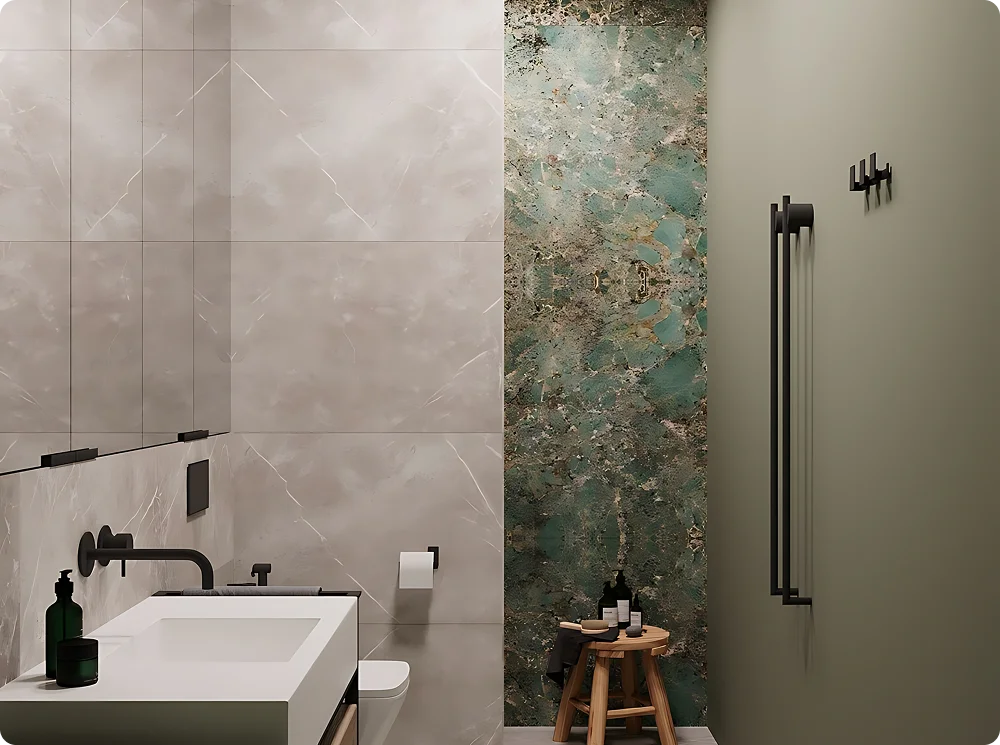
Bathroom floors and walls
Full waterproofing at the joints.
Best For tags
- Vitrified & Porcelain Tiles
- Kitchens & Bathrooms
- Residential & Builder Floors
- Showrooms & Commercial
Kitchen backsplashes and floors
Resists food, oil and cleaning chemicals.
BEST FOR
- Standard Ceramic
- Indoor Floors
- Residentials projects
Swimming pools and water feature
Permanent waterproof grout.
BEST FOR
- Standard Ceramic
- Indoor Floors
- Residentials projects
Commercial kitchens
Restaurants and food-processing floors.
BEST FOR
- Standard Ceramic
- Indoor Floors
- Residentials projects
Retail showrooms
Retail showrooms and hospitality floors with heavy footfall.
BEST FOR
- Standard Ceramic
- Indoor Floors
- Residentials projects
Hospital and laboratory floors
Hospital and laboratory floors requiring chemical resistance.
BEST FOR
- Standard Ceramic
- Indoor Floors
- Residentials projects
Exterior tile installations
Exterior tile installations exposed to weather and thermal cycling.
BEST FOR
- Standard Ceramic
- Indoor Floors
- Residentials projects
Epoxy Grout for Wall Tiles, Floor Tiles & Large-Format Tiles
Epoxy Grout for Wall Tiles
Wall tiles in bathrooms and kitchens are constantly exposed to water splashes, steam, cleaning chemicals and food residue. Cement grout on these joints stains within months and starts to fail within a year or two. Veromaxx epoxy grout for wall tiles gives a permanently sealed joint that stays clean-looking for the life of the installation.
Epoxy Grout for Floor Tiles
Floor tile joints see even more punishment - foot traffic, dropped liquids, cleaning water, and in commercial spaces, wheeled equipment. Veromaxx epoxy grout for floor tiles handles all of it, from residential bathroom floors to commercial retail spaces to industrial food-preparation areas.
Epoxy Grout for Large-Format Tiles
Large-format tiles (600mm and above) have longer joint runs that must handle more thermal movement. Standard cement grout on these joints tends to crack over time. Veromaxx epoxy grout maintains its integrity through thermal cycling, keeping large-format tile installations looking new for years.
Product Variants For Epoxy Grout
Choose the right size for your project needs, from small repairs to large constructions.
Epoxy Grout
Chemical-resistant, stain-proof epoxy grout for kitchens, bathrooms, swimming pools, commercial floors and food-service areas.
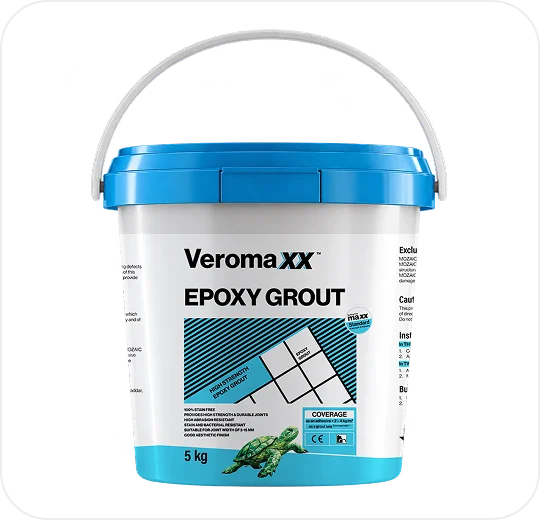
Grout
Waterproof grout for tile joints on walls and floors. Cement-based and epoxy variants for every project type from residential bathrooms to commercial floors.
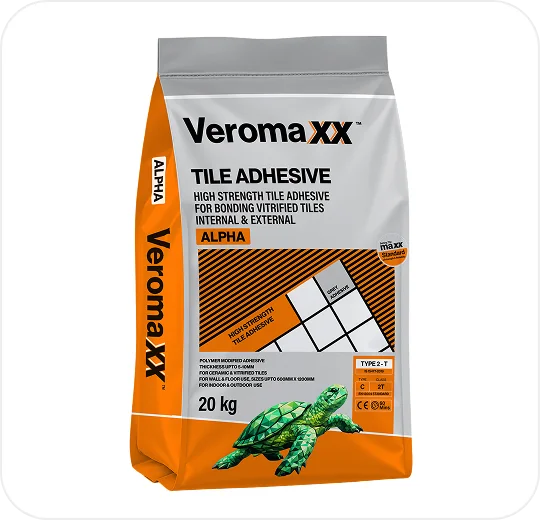
Tile Adhesive
High-bond, polymer-modified cement-based tile adhesive for wall and floor tiles - ceramic, vitrified, porcelain and large-format. Available in graded variants for standard, wet-area and heavy-duty applications.
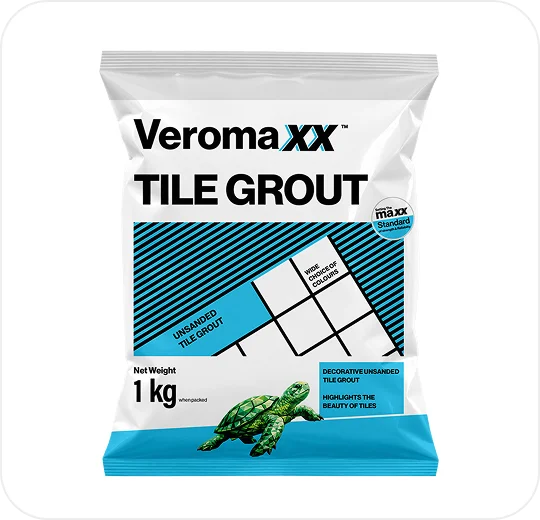
Tile Grout
Polymer-modified cement-based tile joint filler for standard wall and floor tile installations. Crack-resistant, waterproof, easy to mix and apply.

Epoxy Grout
Chemical-resistant, stain-proof epoxy grout for kitchens, bathrooms, swimming pools, commercial floors and food-service areas.
Grout
Waterproof grout for tile joints on walls and floors. Cement-based and epoxy variants for every project type from residential bathrooms to commercial floors.
Tile Adhesive
High-bond, polymer-modified cement-based tile adhesive for wall and floor tiles - ceramic, vitrified, porcelain and large-format. Available in graded variants for standard, wet-area and heavy-duty applications.
Tile Grout
Polymer-modified cement-based tile joint filler for standard wall and floor tile installations. Crack-resistant, waterproof, easy to mix and apply.
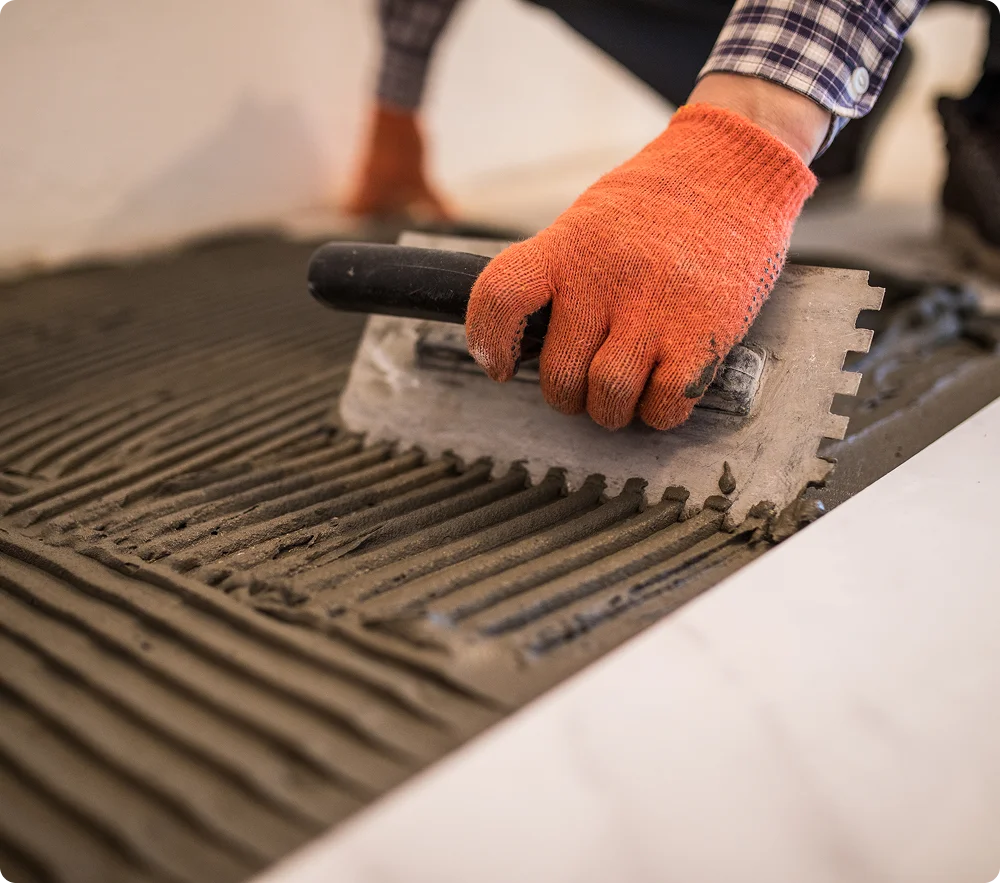
Epoxy Grout
Chemical-resistant, stain-proof epoxy grout for kitchens, bathrooms, swimming pools, commercial floors and food-service areas.
Grout
Waterproof grout for tile joints on walls and floors. Cement-based and epoxy variants for every project type from residential bathrooms to commercial floors.
Tile Adhesive
High-bond, polymer-modified cement-based tile adhesive for wall and floor tiles - ceramic, vitrified, porcelain and large-format. Available in graded variants for standard, wet-area and heavy-duty applications.
Tile Grout
Polymer-modified cement-based tile joint filler for standard wall and floor tile installations. Crack-resistant, waterproof, easy to mix and apply.
Epoxy Grout
Chemical-resistant, stain-proof epoxy grout for kitchens, bathrooms, swimming pools, commercial floors and food-service areas.
Grout
Waterproof grout for tile joints on walls and floors. Cement-based and epoxy variants for every project type from residential bathrooms to commercial floors.
Tile Adhesive
High-bond, polymer-modified cement-based tile adhesive for wall and floor tiles - ceramic, vitrified, porcelain and large-format. Available in graded variants for standard, wet-area and heavy-duty applications.
Tile Grout
Polymer-modified cement-based tile joint filler for standard wall and floor tile installations. Crack-resistant, waterproof, easy to mix and apply.
Epoxy Grout Technical Specifications
Selecting the right tile fixing chemical comes down to three variables: what tile you are installing, where you are installing it, and what conditions the installation will face during its service life. This quick guide maps common scenarios to the recommended Veromaxx tile adhesive and grout combination — for detailed specification support on any project, our technical team is available over WhatsApp or phone.
| Property | Value | |
|---|---|---|
| Type | Two-part epoxy resin and hardener with filler | |
| Colour | Multiple colours available — see colour chart | |
| Mixing ratio | As specified on pack — pre-measured components | |
| Pot life | 45-60 minutes at 27°C | |
| Water absorption | < 0.5% (effectively waterproof) | |
| Chemical resistance | Resistant to household chemicals, food acids, oils, solvents | |
| Temperature resistance | -20°C to +80°C in service | |
| Foot traffic ready | 24 hours after grouting | |
| Full chemical resistance | 7 days after grouting |
How to Mix & Apply Epoxy Grout
Follow this verified 4-step execution protocol to ensure a 100% void-free ceramic floor installation.
Ensure tile installation is fully cured (minimum 24 hours after fixing). Clean tile joints of all dust, adhesive residue and loose material. Slightly dampen the joints in hot weather to prevent premature drying.
Empty the entire hardener component into the resin component (pre-measured packs - do not use partial quantities). Mix thoroughly with a low-speed drill and paddle for 2-3 minutes until uniform colour is achieved.
Add the filler powder gradually while mixing, until a smooth, workable paste is achieved. Do not add water.
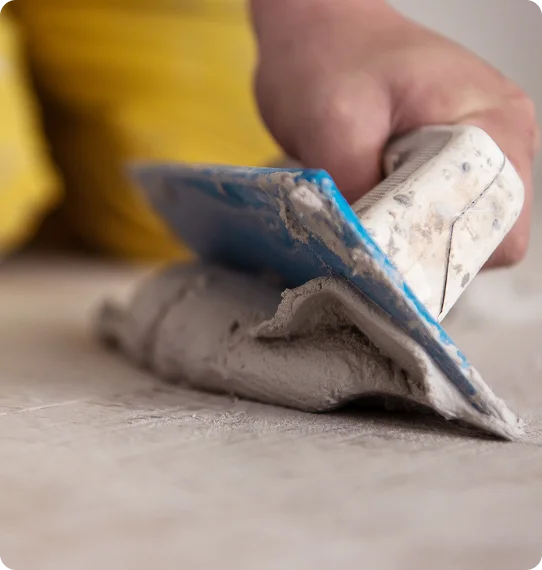
Apply the grout using a hard rubber float held at 45° to the tile surface, pressing firmly to fill the joints. Work diagonally across the joints.
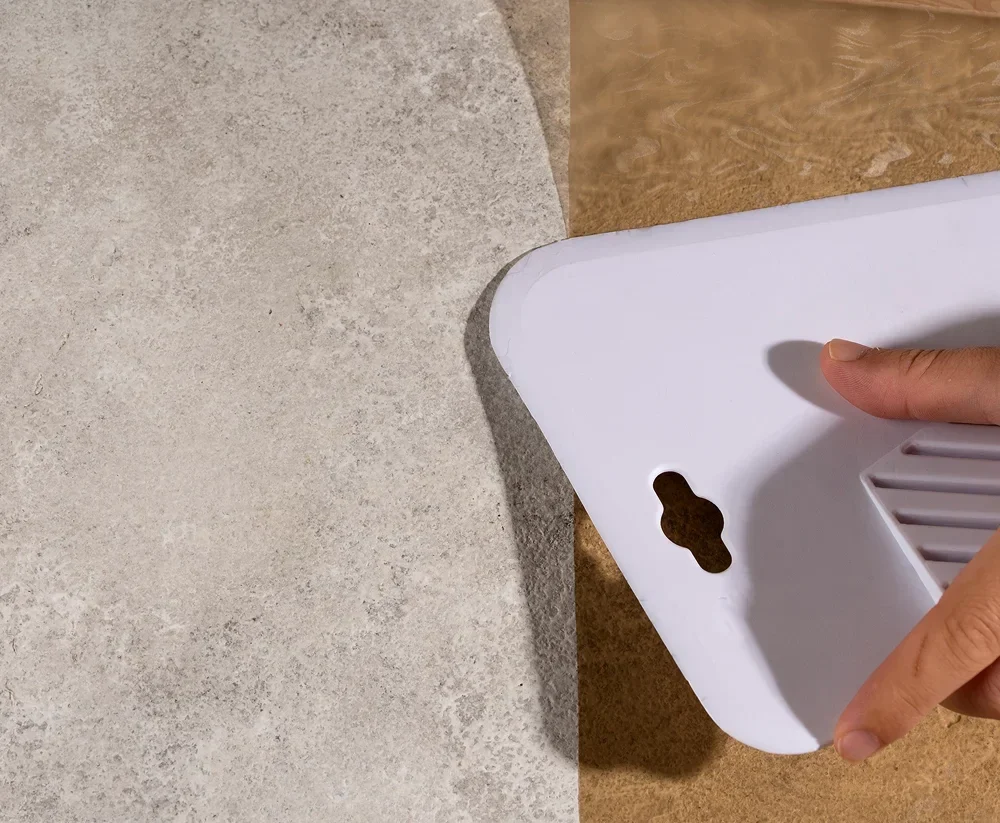
Remove excess grout from the tile surface immediately with the float held at 90°, working diagonally. Do not delay — epoxy grout becomes very difficult to remove once it starts to set.
After 15-20 minutes (once the grout has firmed up in the joints), clean the tile surface with a damp sponge in circular motions. Rinse the sponge frequently in clean water.
A final polish with a clean, dry cloth 24 hours after application removes any remaining epoxy haze and reveals the finished joint.
Ensure tile installation is fully cured (minimum 24 hours after fixing). Clean tile joints of all dust, adhesive residue and loose material. Slightly dampen the joints in hot weather to prevent premature drying.
Empty the entire hardener component into the resin component (pre-measured packs - do not use partial quantities). Mix thoroughly with a low-speed drill and paddle for 2-3 minutes until uniform colour is achieved.
Add the filler powder gradually while mixing, until a smooth, workable paste is achieved. Do not add water.
Apply the grout using a hard rubber float held at 45° to the tile surface, pressing firmly to fill the joints. Work diagonally across the joints.
Remove excess grout from the tile surface immediately with the float held at 90°, working diagonally. Do not delay — epoxy grout becomes very difficult to remove once it starts to set.
After 15-20 minutes (once the grout has firmed up in the joints), clean the tile surface with a damp sponge in circular motions. Rinse the sponge frequently in clean water.
A final polish with a clean, dry cloth 24 hours after application removes any remaining epoxy haze and reveals the finished joint.
Epoxy Grout Drying & Curing Time
Veromaxx epoxy grout is ready for light foot traffic 24 hours after application. Full chemical and mechanical resistance develops over 7 days. Do not expose joints to standing water, cleaning chemicals or heavy loads during this curing period. Cure time extends in cool weather – allow additional time below 20°C.
How to Store Epoxy Grout
Store in a cool, dry place at temperatures between 5°C and 30°C. Keep containers sealed. Shelf life is 12 months from date of manufacture in unopened original packaging.
Epoxy Grout Safety Information & Handling
Is epoxy grout for tiles a better option than cement grout?
For any installation that will see water, food, chemicals or heavy use, epoxy grout is significantly better than cement grout. Epoxy joints are waterproof, stain-resistant, chemical-resistant and mechanically stronger than the surrounding tile. Cement grout absorbs water and stains, discolours within months, and typically starts crumbling within a few years. The upfront cost of epoxy is higher but the lifetime cost is lower.
How easy is it to maintain epoxy grout for tiles?
Cured epoxy grout requires very little maintenance. Because it does not absorb water or stains, regular cleaning with a mild tile cleaner is enough to keep it looking new. There is no sealing required, no periodic reapplication, and no discolouration to touch up. Avoid abrasive cleaning tools that could dull the surrounding tile.
How long does epoxy grout for tiles take to dry completely?
Veromaxx epoxy grout is set enough for light foot traffic 24 hours after application. Full chemical and mechanical resistance develops over 7 days. During the curing period, avoid exposing the joints to standing water, aggressive cleaning chemicals, or heavy loads.
Can epoxy grout for tiles protect against stains and moisture?
Yes – this is what epoxy grout is designed for. Cured epoxy joints have water absorption below 0.5%, which is effectively waterproof, and the epoxy chemistry resists staining from food, oil, coffee, wine, cleaning chemicals and household spills. This is why epoxy grout is the standard specification for restaurant kitchens, hospital floors, laboratories and premium residential wet areas.
What is the lifespan of epoxy grout for tiles after installation?
Properly-applied Veromaxx epoxy grout lasts the life of the tile installation – 15-20 years is realistic in residential settings, and 10-15 years in demanding commercial environments. Compare with cement grout, which typically shows staining within 6 months, discolouration within 2 years and physical failure within 5-7 years in wet areas.
What safety measures should be followed while applying epoxy grout for tiles?
Always wear nitrile gloves and safety glasses when handling the resin, hardener and mixed material. Work in a well-ventilated area. Avoid direct skin contact — if the material contacts skin, wash immediately with soap and water rather than solvent. Once cured, the grout is chemically inert and completely safe. A full safety data sheet is available on request.